Watch this video clip from the 1996 movie Rumble in The Bronx starring Jackie Chan before solving this problem. (Warning: This movie was filmed almost entirely in Vancouver. Not a single frame was shot in The Bronx.)
Jackie Chan jumped over a narrow one way street in Vancouver known as Trounce Alley or Blood Alley. Since I have not been there to measure any dimensions, we will have to assume it's wide enough to accommodate two cars side by side — about 5 m. This scene was shot from the top level of the parking structure in the abandoned Woodward's department store complex. Woodward's went out of business in 1993 and the parking structure was demolished in 2006. The only thing of known vertical size is Jackie Chan who is 1.74 m tall, but he is never vertical at any time during this jump. A wooden ramp is visible on the parking structure and appears to be in line with the roof of the the adjacent apartment building. We will have to assume the apartment building has floors separated by an appropriate height — about 3 m. Given these assumptions, answer the following questions.
How long was Jackie Chan in the air?
How fast would Jackie Chan have to run off the parking structure to perform this stunt?
Movies often exaggerate reality for dramatic effect. Is your answer to the previous part of this question a reasonable speed for an able-bodied person with stunt training? Justify your answer with physics. (Hint: If you have the time, you may want to read the Internet Movie Database entry for this film. It contains reliable descriptions of how this stunt was performed. You still need to justify your answer with physics, however.)
A simple projectile is an object that moves horizontally with constant speed and vertically with the acceleration due to gravity.
How long was Jackie Chan in the air? How long did it take him to fall 3 m? Let's call down positive, since that's where he's heading vertically, and, since his initial velocity appears to be entirely horizontal, let's say his initial vertical velocity is zero.
List the givens and the unknowns.
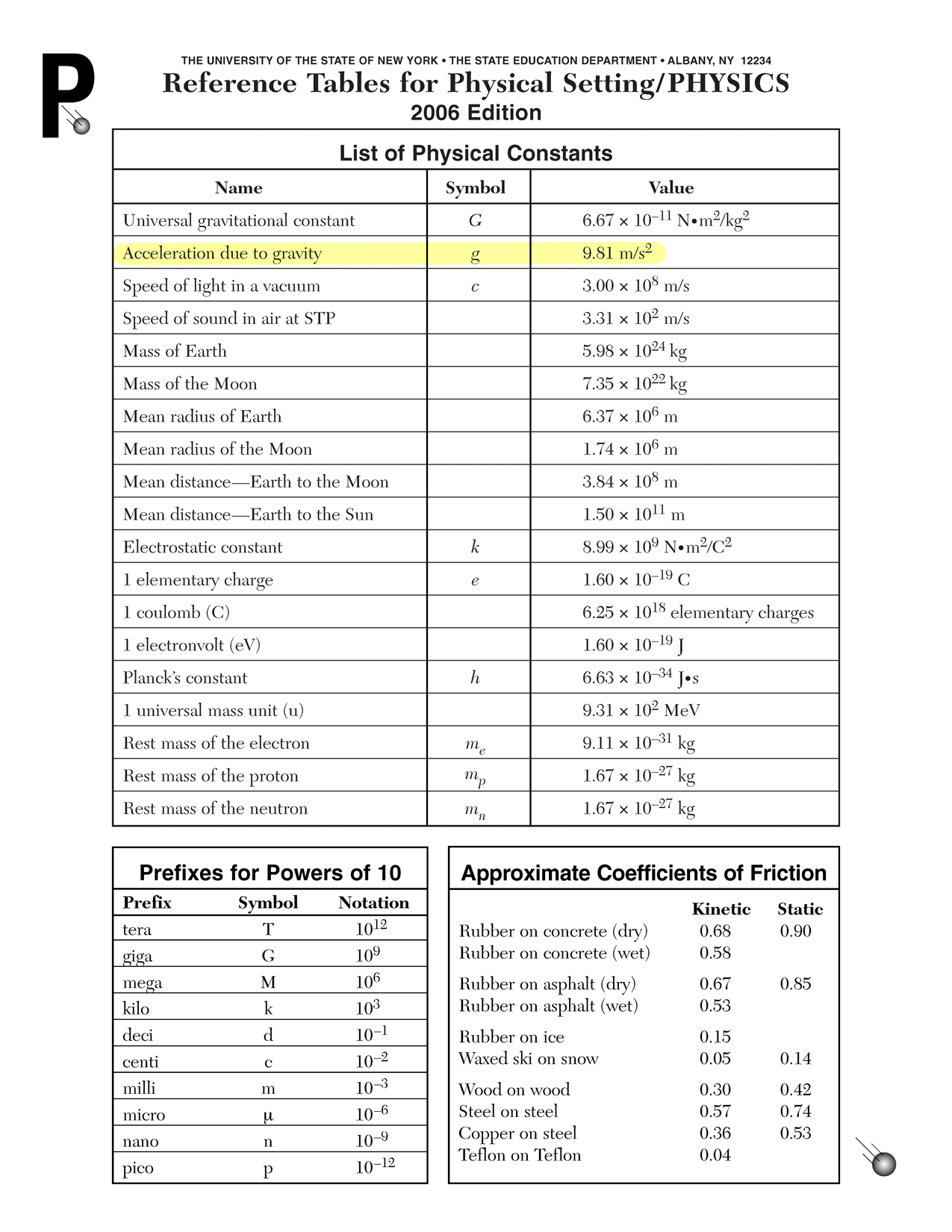
y =
+3 m
vi =
0 m/s
a =
+9.8 m/s2
t =
?
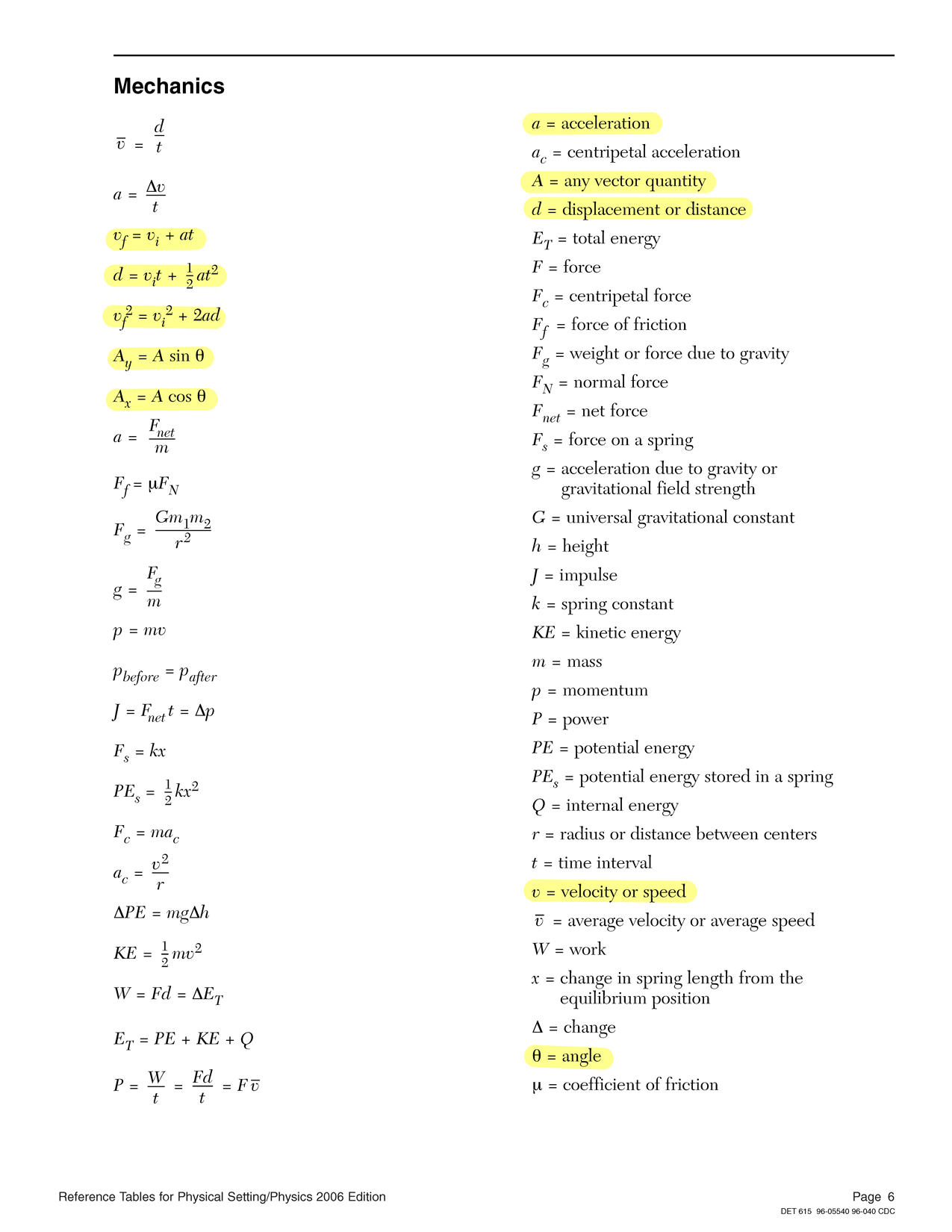
Pick an equation of motion that has all of these quantities in it.
y = vit + ½at2
No reason to write the first term anymore since it's zero.
y = ½at2
Solve for what you're looking for (time), substitute numbers with units, churn out an answer with a calculator.
t = √
2y
a
t = √
2(3 m)
9.8 m/s2
t = 0.78 s
How fast would Jackie Chan have to run? How fast is Jackie Chan moving if he travels 5 m forward while falling down 3 m? That's the speed he needs when he runs off the ramp since the horizontal speed is constant while he's in free fall. Speed is distance over time and you can do the rest.
v =
∆x
∆t
v =
5 m
0.78 s
v = 6.4 m/s
Is this a reasonable speed? Yes. It's entirely reasonable. A good sprinter can run 100 m in 10 s or 10 m/s, so we're well below the upper limit of human ability. A good middle distance runner can run 1,600 m in 4 minutes (240 s) or 6.6 m/s, but we're not asking Jackie Chan to run a mile. A physically fit stunt actor should be able to reach the speed we calculated in just a few meters, which is all the room there is on the roof of the parking structure.
For fun, I decide to drive my car between two ramps inclined 37° above the horizontal with a speed of 13.0 m/s. (For this problem, assume the takeoff and landing heights are identical and that air resistance is negligible.)
What are the horizontal and vertical components of my car's initial velocity?
How long was my car in the air?
What horizontal distance did my car travel before hitting the second ramp?
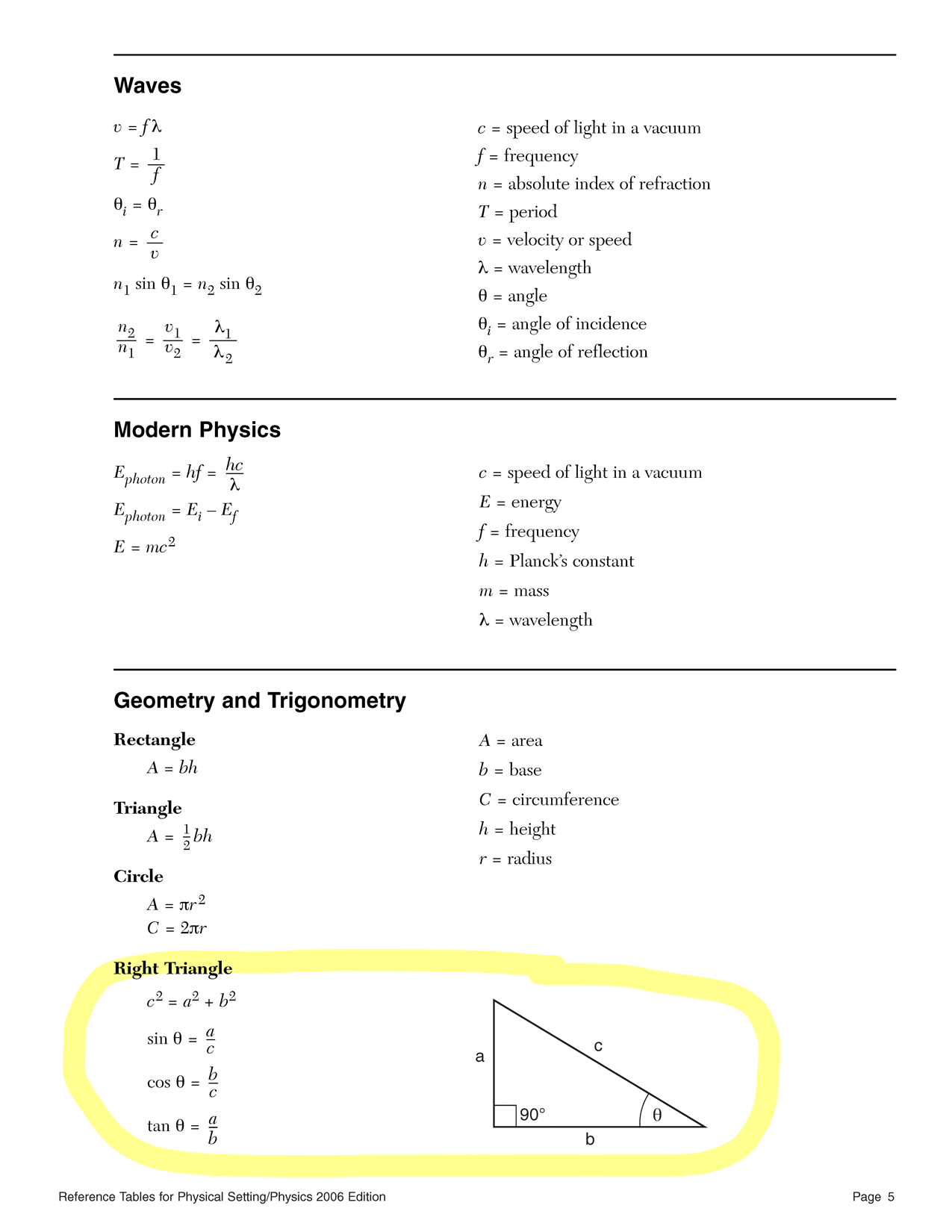
Use cosine and sine to compute the components of my car's initial velocity?
vx = v cos θ
vx = 13.0 m/s cos(37°)
vx = 10.4 m/s
vy = v sin θ
vy = 13.0 m/s sin(37°)
vy = 7.82 m/s
The time the car spends in the air is the same as the time it takes an object to go up and come back down if it has an initial velocity equal to the vertical component you calculated above. Here's one way to do that.
The car starts with a velocity of +7.82 m/s (if we agree that positive is up and negative is down) and ends with a velocity of −7.82 m/s. Gravity points down, so let's make that negative too. Write out your givens and the unknown you're solving for.
vyi =
+7.82 m/s
vyf =
−7.82 m/s
a = −g =
−9.81 m/s2
Δt =
?
Pick an equation of motion that has all of these quantities in it and solve it for the unknown. Then it's numbers in and answer out. (Recall that the symbol Δ (delta) means change, and change is always final value minus initial value.)
Δt =
Δvy
a
⇐
a =
Δvy
Δt
Δt =
(−7.82 m/s) − (+7.82 m/s)
−9.81 m/s2
Δt = 1.59 s
The horizontal motion is one of constant velocity. Distance is speed times time. Can't get more basic than that.